Editorial preview. Real products, illustrative ratings. No hands-on testing claimed.How to read this guide
THE KITCHEN FIELD GUIDE

Find the right machine for what you make.

Choose the job before the machine. Blenders cut ingredients down; mixers combine them, add air, or work dough. A longer feature list does not make one category a substitute for another.

Start with three recipes you make regularly. Then consider how much you prepare, where the appliance will live, and which parts you will wash after every use.

Updated Nov 1, 20264 categories · one clearer choice
MATCH THE TOOL TO THE TASK

Four ways to work in the kitchen.

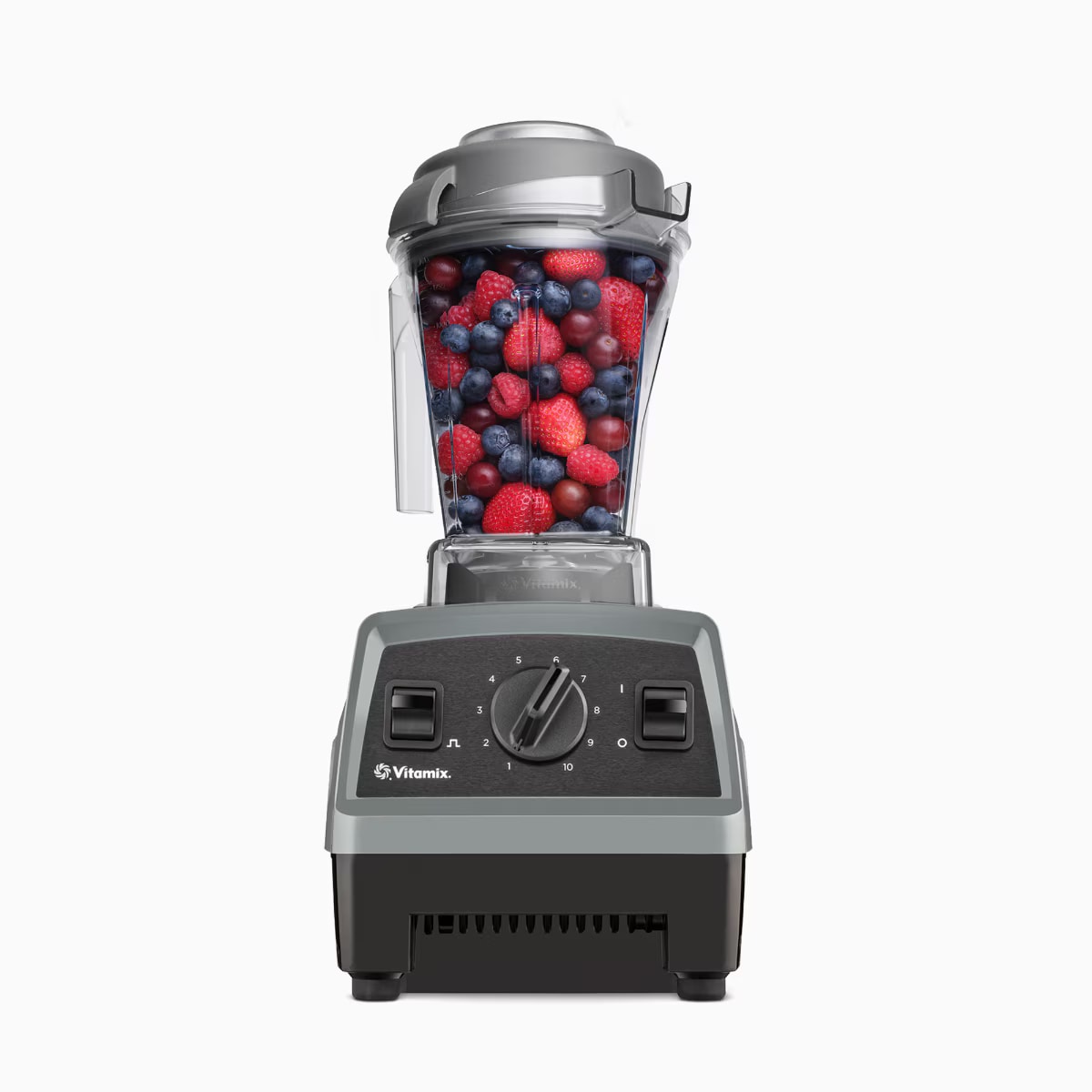
Vitamix Explorian E31001 / COUNTERTOP BLENDER

For drinks, purées, and sauces.

A blade assembly works inside a dedicated jug. This format makes sense when you routinely blend ingredients together and pour out the result. Check permitted ingredients and minimum quantities: a large container does not automatically handle a tiny portion well.

Explore the Vitamix E310
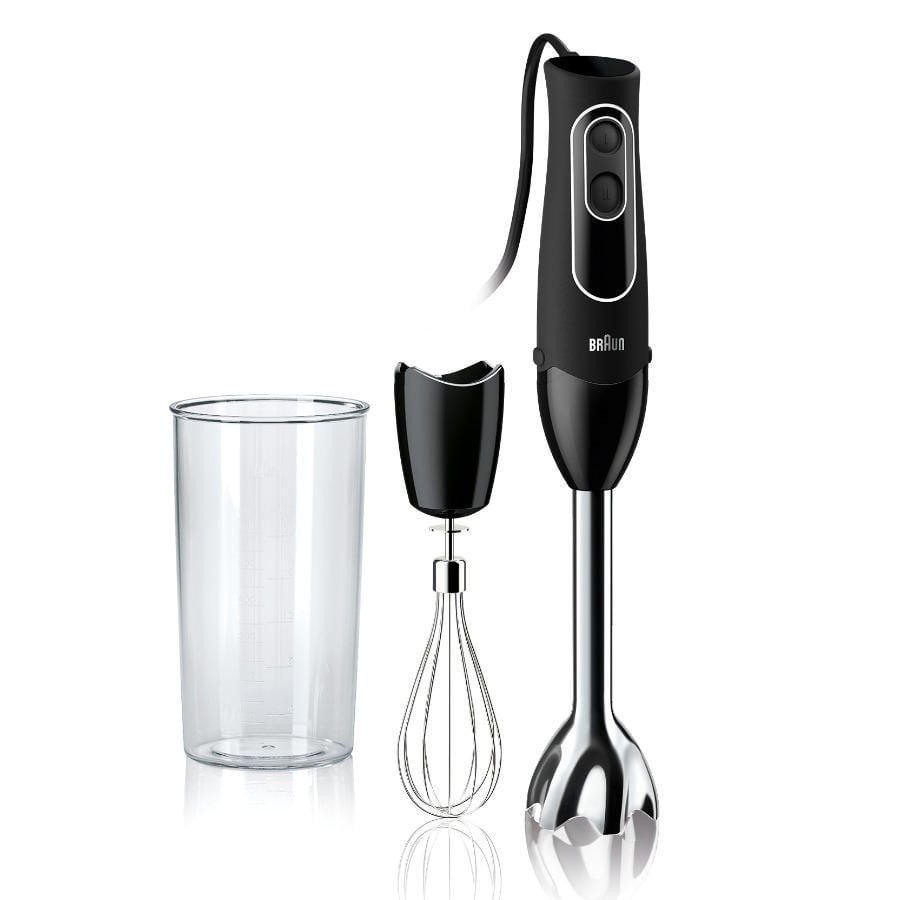
Braun MultiQuick 5 MQ50502 / IMMERSION BLENDER

Bring the blade to the food.

A handheld shaft reaches into a suitable vessel. Consider this category if soups and sauces are your regular task and you would rather avoid transferring a batch to a jug. You still hold and guide the tool; vessel depth and the manufacturer's operating instructions matter.

Explore the Braun MultiQuick 5
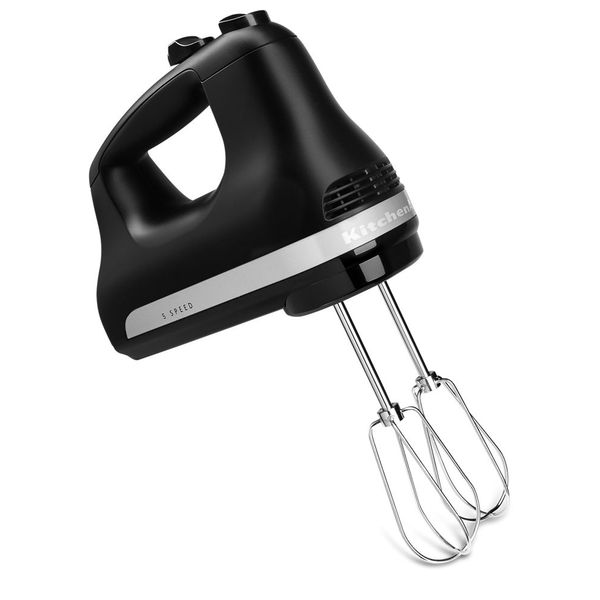
KitchenAid 5-Speed Ultra Power KHM51203 / HAND MIXER

For the occasional baking bowl.

Rotating beaters combine ingredients while you move the appliance around your own bowl. It is a useful category to consider for cake batter or whipped cream when storage is limited. Check which accessories are included; beaters alone do not turn it into a dough-hook mixer.

Explore the KitchenAid 5-Speed
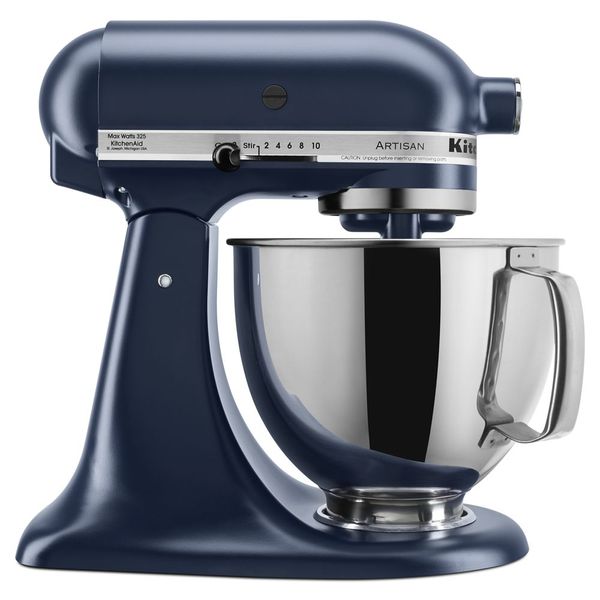
KitchenAid Artisan 5 Qt KSM150PS04 / STAND MIXER

A supported bowl for regular baking.

A stand supports the motor and bowl, with attachments chosen for mixing, whipping, or kneading. Consider the format when baking is a regular routine. Allow room for its operating movement, and check recipe capacity and dough limits rather than judging by bowl volume alone.

Explore the KitchenAid Artisan
THE PRACTICAL DIFFERENCES

Compare categories before models.

Typical category characteristics; exact capabilities depend on the model and its instructions.
TypeMechanism & handlingTypical tasksCheck before use
Countertop blenderBlades in a jug; ingredients go into the appliance.Smoothies, purées, blended sauces.Fill limits, temperature rules, and permitted frozen ingredients.
Immersion blenderHandheld blade shaft; the appliance goes into a vessel.Soups, sauces, smaller blending jobs.Suitable vessels, immersion depth, temperature, and run time.
Hand mixerHandheld rotating beaters; use your own mixing bowl.Cake batters, cream, light mixing.Attachment suitability, mixture resistance, and operating limits.
Stand mixerSupported motor and bowl; change attachments for the task.Batters, whipping, compatible dough recipes.Minimum batch size, dough capacity, and attachment speed limits.
BEFORE IT COMES HOME

Measure the space. Picture the cleanup.

  • Measure the operating space. Leave clearance for a lifted head, removed lid, or jug, not just the appliance at rest.
  • Choose a storage plan. Include the bowl, shaft, beaters, and other accessories. Consider how often you would lift the machine out.
  • Read the cleaning instructions. Check each component separately; a dishwasher-safe attachment does not make the motor unit washable.
  • Check your usual batch. Match minimum and maximum recipe quantities to what you actually make.
COMMON QUESTIONS

A few useful distinctions.

Can one appliance do everything?

Accessories can extend a machine's uses, but the base mechanism still matters. Check the exact attachment and recipe instructions rather than assuming every blending or baking task is supported.

Is a bigger bowl always better?

No. A larger bowl can help with larger batches, but a small quantity must still reach the working attachment. Look for minimum quantities as well as maximum capacity.

Does more motor power mean better results?

A power figure alone does not establish texture, mixing consistency, or durability. Those outcomes require suitable comparative tests, which this preview has not performed.

Should I compare the demo scores?

No. The numbers demonstrate the page layout. They are not measured results, and the four machine types serve different jobs.

NEXT: MEET THE EXAMPLES

Find a starting point for your recipes.

Return to the shortlist